 Bonaire Snorkeling Tours
Is Snorkeling in Bonaire Worth It? An Honest Look
Last reviewed August 2026
Yes, if you accept sharp ironshore entries and a reef that has visibly thinned since the mid-2010s; no, if soft sand and untouched coral are the point of the trip. Is snorkeling in Bonaire worth it? The answer depends less on the island than on what a traveller expects to find in the water. The reef starts metres from shore in places, the water holds at 26 to 28°C year-round, and Bonaire's marine park charges $40 a year to protect the whole coastline. This page also names the shore entries directly, since two separate searches, the worth-it question and shore snorkeling on Bonaire, land on the same handful of results. Travellers who would rather skip the gear-hauling can start with guided Bonaire snorkeling trips, which run from $60.
Quick answer
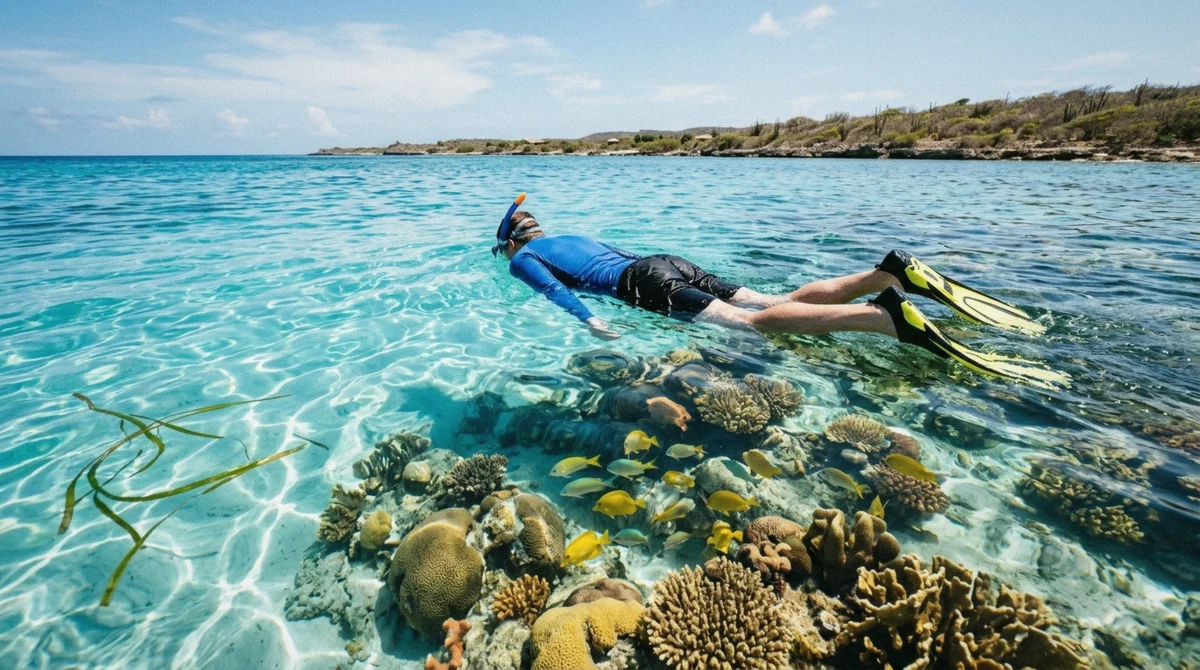
Snorkeling in Bonaire is worth it if you want reef starting close to shore, 350-plus fish species, and don't mind entering over rock. Guided boat trips run $60 to $130 and put you over the healthiest coral without the ironshore scramble; the free shore entries cost nothing beyond the $40 annual park fee. Skip it if soft sand and untouched coral are the point, because the shallow reef has thinned since the mid-2010s.
Key takeaways
- Guided trips run $60 to $130 per person, all cheaper than a week of rental gear plus the water taxi once fees are counted.
- The best-condition reef is off Klein Bonaire, reachable only by boat or water taxi, uninhabited and undrained.
- The honest downside: guides who rechecked the reef in 2022 documented real decline in shallow coral and fish size since bleaching and storm damage set in.
- Skip it if soft sand matters more than fish count; Bonaire's shore entries are sharp ironshore, and the full island comparison against Curaçao and Aruba covers the easier alternative.
- Trade winds blow onshore about 95% of the time, so late spring tends to bring the calmest water.
- Non-swimmers and total beginners do better on the $60 Lac Bay mangrove kayak than a straight reef drift.
The Short Answer
Framed plainly: book a boat trip or walk in from a named shore site and you are over living reef within minutes, with visibility that regularly runs 20 to 30 metres and up to 40 metres on a calm day. The catch sits between the parking spot and the water. Most entries cross a shelf of sharp, fossilized ironshore, and the shallow reef itself is not the reef of a 2010s dive brochure.
It has thinned.
Worth It If
- You want to be in the water minutes after arriving, with reef starting close to shore rather than a long swim out
- You are comfortable wearing reef boots over rock and treat the entry as part of the trip, not an inconvenience
- A week or more on the island lets the $40 nature fee pay for itself across several sessions
Skip It If
- You need a soft sandy beach to wade in from; Bonaire has very few, and most of the coastline is ironshore
- You are chasing the reef from a 2015-era brochure; guides who rechecked in 2022 documented real decline
- Your budget stops at flight and hotel; Bonaire adds a nature fee and a Visitor Entry Tax before a single tour is booked
What Snorkeling on Bonaire Actually Costs
The $40 STINAPA nature fee applies to everyone 13 and older who enters the sea anywhere in the marine park; children under 13 travel free, and cruise passengers pay a $10 day rate instead. That fee is a fixed cost of the island itself, whether or not a tour is booked. The full price breakdown, including the entry tax most guides never mention, lives on the Bonaire snorkeling cost page; here is the version that matters for the worth-it question.
DIY Day vs a Guided Trip
The gap between doing it alone and paying for a seat on a boat is smaller than it looks once the fee and rental gear are added up.
| Route | What It Costs | What's Included | What You Give Up |
|---|---|---|---|
| Shore entry, own gear | $40 fee + $18 to $25/day gear rental | Access to any named shore site, unlimited time | No boat, no guide, ironshore entry, a rental car is effectively required |
| Klein Bonaire by water taxi | $40 fee + $25 round-trip taxi + $5 gear | A boat crossing to the best-condition reef on the island | No guide, no drift, fixed departure times |
| Two-stop guided drift | $85, marine park fee included | Boat, two sites, a guide in the water, gear provided | Fixed schedule, capped at 10 people |
For a single day, the DIY shore route and the cheapest guided boat land within about $20 of each other once the fee is counted, and the guided trip buys a boat, a guide who spots wildlife, and no ironshore exit. The DIY route wins on flexibility: no schedule, any site, as long as you want.
What You Get for the Money: The Reef, the Fish, the Visibility
Bonaire's entire coastline, from the high-water line to 60 metres depth, has been a national marine park since 1979, one of the first in the world. That protection is the reason the reef still starts as close to shore as it does.
STINAPA has managed the park since 1962 and the whole system carries more than 350 fish species and around 57 coral species. Visibility typically runs 20 to 30 metres, up to 40 metres on the calmest days, which is enough to see the reef structure from the surface without diving down for a closer look.
What You'll See
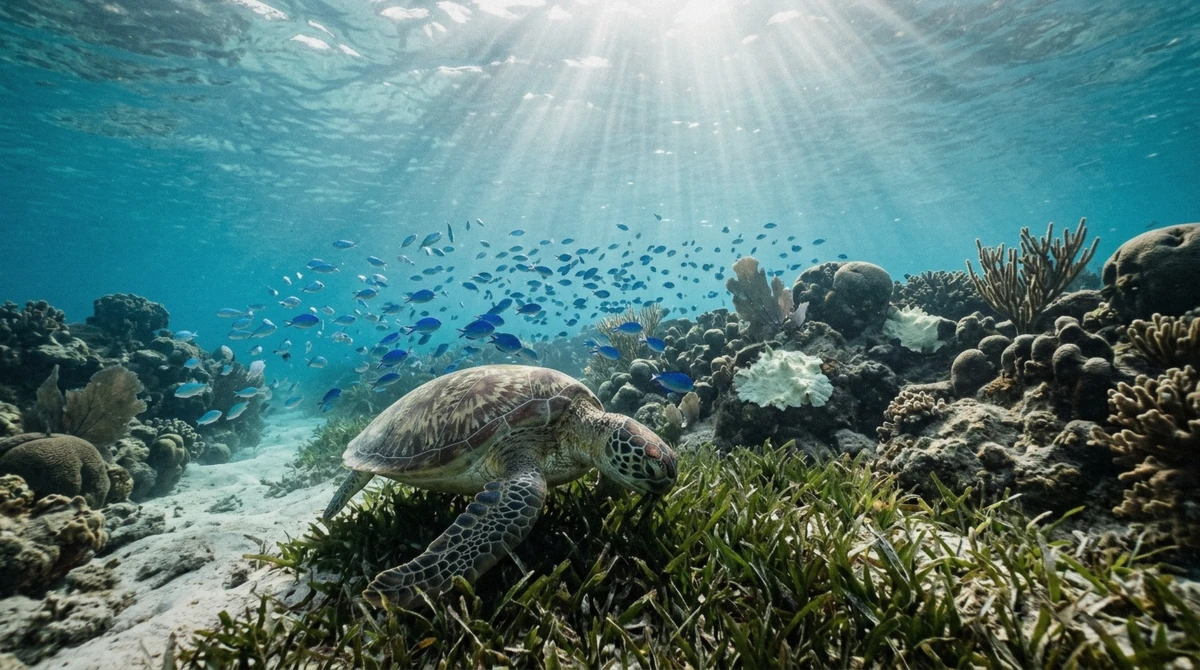
Parrotfish, angelfish and surgeonfish are routine on any healthy site. Schooling blue tangs move over the reef edge in numbers, and green and hawksbill turtles are common enough that most trips report at least one sighting, though never guaranteed. Tarpon show up at dusk, and Reef Renewal Bonaire's staghorn and elkhorn coral nursery plots are visible from the surface in the shallows, a rare chance to watch active reef restoration rather than just its aftermath.
Klein Bonaire's beaches are protected sea-turtle nesting ground, roughly May through December.
- Bring mineral sunscreen only: Bonaire banned oxybenzone sunscreen in 2021, and reef-safe formulas are sold at every dive shop on the island
- No wetsuit is needed in 26 to 28°C water, up to 29°C in late summer
- A rash guard covers sun exposure without adding sunscreen to the water at all
The Honest Downsides: Ironshore Entries, Wind and a Reef That Has Thinned
This is the section most tour listings skip. It is also the reason to trust the rest of this page.
The entries are brutal
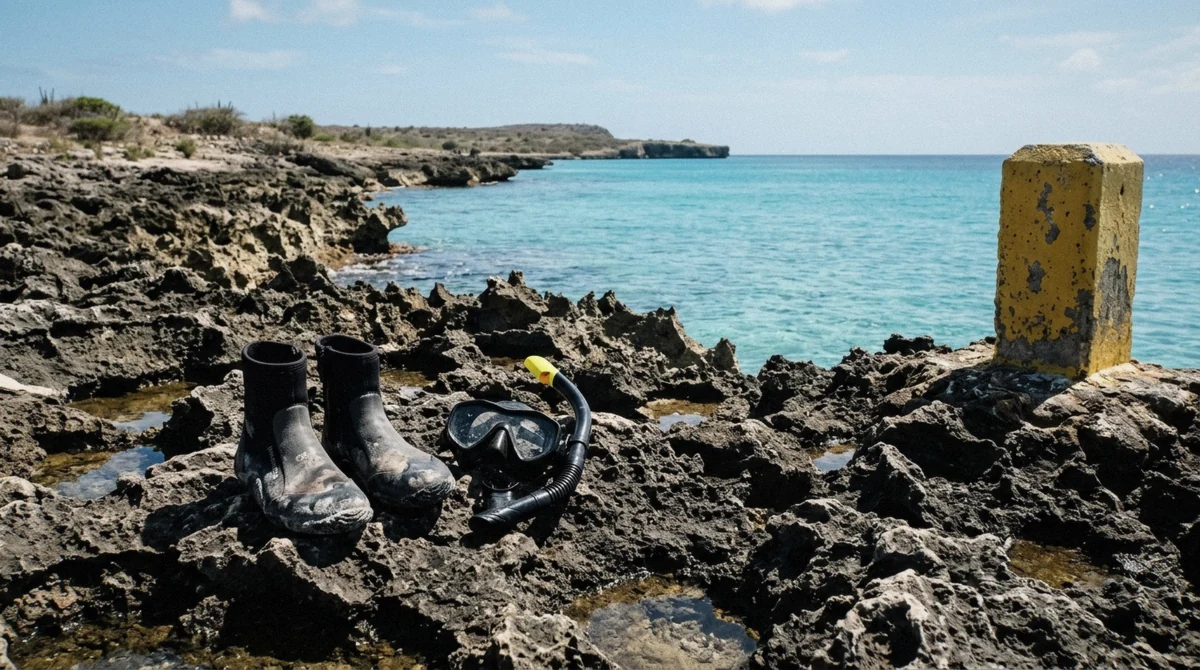
Most shore sites cross sharp fossil ironshore studded with urchins and fire coral, and there are very few sandy beaches on the whole island. Reef boots are effectively required, not optional, and the exit, not the entry, is where most scrapes happen: legs are tired, footing is unsteady, and a small swell turns flat rock into a hazard. Anyone who has only snorkeled from sand should expect a genuinely different, more careful kind of entry here.
Wind decides your day
Trade winds blow from the east about 95% of the time, at 13 to 20 mph, which is why nearly all snorkeling happens on the leeward west coast; the east coast is unsafe to enter except at Lac Bay. A windy morning does not usually cancel a trip, but it narrows which sites are workable, and shore snorkelers who show up expecting a specific site sometimes find it too rough.
The reef has thinned, and that is worth saying plainly
Long-running snorkel guides who revisited Bonaire in 2022 documented significant decline in shallow-reef health, fish size and diversity, driven by bleaching, coral disease, storm damage and rising cruise traffic. Some now rate Curaçao the easier snorkeling destination for a casual visitor. Klein Bonaire's reefs, protected by distance and no shoreline development, have held up best of anywhere on the island, which is the honest reason it keeps coming up as the site worth the extra logistics.
Where the Shore Snorkeling Actually Is
Six named sites cover most of what a shore snorkeler on Bonaire actually visits. Two of them, Klein Bonaire and the Lac Bay mangroves, are not truly DIY, but they belong on the same list because searches for shore snorkeling on Bonaire keep returning them.
| Site | Entry | What You See | When It Works |
|---|---|---|---|
| Karpata | Steep rock and coral rubble, calm days only | The best-preserved reef on the north coast | Only when the trade wind eases, best in early morning |
| 1000 Steps | A long stair descent from the coast road (the name overstates the count) | Turtles are a near-routine sighting | Any calm morning, less crowded than the town sites |
| Bari Reef | Easy walk-in at the Sand Dollar shoreline, in town | Highest fish-species count on the island | Reliable most days, sheltered by the town's position |
| Salt Pier | Walk in from the road, watch for ships | Sea fans and pier pilings thick with life | Only when no vessel is loading at the pier |
| Klein Bonaire (No Name Beach) | Boat or water taxi only, no shore access | The healthiest coral on the island | Nearly any day, sheltered by the island itself |
| Sorobon / Lac Bay | Guided kayak into the mangrove channels only | A juvenile reef-fish nursery among the mangrove roots | Guided trips only; the open water off Sorobon beach has little reef |
The Named Shore Entries, on the Map
Four sites a traveller with a rental car can reach alone; two that need a boat or a guide either way.
The Honest Trade-Offs
What we genuinely like
- The reef starts metres from shore at several named sites, no long swim needed to reach living coral
- More than 350 fish species and around 57 coral species live in a marine park that has protected the whole coastline since 1979
- Water holds at 26 to 28°C year-round, so no wetsuit and no cold-water gear to pack
- Guided trips add a boat, a guide in the water, and sometimes the $40 park fee, for $60 to $130
The honest downsides
- Most shore entries cross sharp fossil ironshore; reef boots are effectively required and the exit, not the entry, is where people get hurt
- Guides who rechecked the reef in 2022 documented real decline in shallow-reef health and fish size since bleaching and storm damage set in
- Trade winds blow onshore about 95% of the time, so plans built around one specific site sometimes move at short notice
- The $40 nature fee and a separate Visitor Entry Tax apply before booking a single tour; the [real total is higher than most guides admit](/bonaire-snorkeling-cost/)
Who it's NOT for: Travelers who need soft sand to wade in from, anyone chasing the reef of a 2010s brochure, and non-swimmers without a guided option like the mangrove kayak.
When It's Worth It Most
The driest, calmest window runs March through June, when trade winds are steadier and rainfall is at its lowest for the year, 12 to 15 millimetres a month against 71 to 96 in October and November. December through April is technically peak season and busier at the popular shore sites, but conditions hold up well.
Morning departures beat afternoon ones at nearly every site here: wind builds through the day, and boat operators run their first trips before it picks up. October and November bring the year's worst combination for snorkelers, the highest rainfall and the only months the wind can reverse and cut visibility, so they are the stretch most worth avoiding on a short trip.
Who Should Go, and Who Should Skip It
If you want an easy first snorkel with a guide swimming beside you
Book the $85 two-stop drift, capped at 10 people, with the $40 park fee already inside the price.
If you're traveling with a non-swimmer or a nervous beginner
The $60 Lac Bay mangrove kayak is the only guided access to the mangroves and needs no open-water confidence.
If you want the best-condition reef on the island and don't mind the extra step
Take a water taxi or boat trip to Klein Bonaire; its reef has held up better than anywhere on the main coast.
If you're on a cruise stop with only a few hours between docking and reboarding
The Double Dip catamaran runs 3.5 hours and is built to work around ship schedules.
If you need soft sand and untouched coral to feel the trip was worth it
Skip Bonaire for this trip; see the full island comparison against Curaçao and Aruba for the easier alternative.
Worth It If You Are Already Going to Aruba or Curaçao?
If Aruba or Curaçao is the main stop and Bonaire is only a side trip, the honest skip case is real. Curaçao alone has more than 70 shore-entry sites with easier beach access, and Aruba's calmer, sandier swimming asks far less of a traveller who just wants to float. Neither of those islands demands the ironshore scramble that Bonaire does, and neither has a comparable nature fee to plan around.
A rushed half-day on Bonaire, squeezed between flights, mostly buys frustration.
The still-go case holds when there is a spare morning anyway. Bonaire's reef starts closer to shore than either neighbor's, the fish count runs higher, and Klein Bonaire's turtles and coral are worth the extra logistics if a full morning is genuinely free. Treat it as a complement to an Aruba or Curaçao trip, not a preview of it: go for the one thing Bonaire does better, close-in reef, not to rank all three islands in an afternoon.
For the full island-by-island comparison, see Bonaire versus Aruba versus Curaçao for snorkeling.
How to Book Without Overpaying
All six trips compared here offer free cancellation up to 24 hours before departure and a reserve-now-pay-later option, so there is little reason to book last minute and risk paying more for a same-day slot once boats fill up. A week or more of lead time, especially in the December to April peak season, keeps the smaller-capacity trips like the 10-person drift snorkel available.
For a first booking, the two-stop drift snorkel at $85 balances price and group size well. Travelers who want a bigger, more social boat and don't mind a 24-person cap should look at the Double Dip catamaran at $105, rated 5.0 across 1,421 reviews. Anyone snorkeling with a non-swimmer should start with the mangrove kayak at $60 instead of forcing a reef trip that will not work for the whole group.
To compare the boat trips side by side before deciding, the tour list on the homepage has price, duration and rating for all six.
Worth It Questions
Is snorkeling in Bonaire still worth it in 2026?
Yes for most travellers, with the honest caveat that the reef has thinned since guides last documented major decline in 2022. It is still one of the few marine parks in the Caribbean with reef starting metres from shore and 350-plus fish species, which is more than most alternatives offer even in their current condition.
What is the best free shore snorkel spot on Bonaire?
Bari Reef, for the easiest entry and the highest fish-species count on the island. Karpata and 1000 Steps are close behind on quality but ask for a steeper entry or a longer walk down.
Do beginners need a guide to snorkel in Bonaire?
Not strictly, but it helps. The ironshore entries are the real barrier for a first-timer, not the swimming itself, and a guided trip like the two-stop drift removes that step entirely by launching from a boat.
How rough are the shore entries on Bonaire?
Rough enough that reef boots are effectively required. Most sites cross sharp fossil ironshore with urchins and fire coral, and the exit, not the entry, is where most scrapes happen once legs are tired.
Is Klein Bonaire worth the extra trip?
Yes. It is uninhabited, nothing drains into the water around it, and its reef has held up better than anywhere on the main coast. A water taxi runs $25 round trip; guided trips like the two-stop drift stop there directly.
Should I choose Bonaire or Curaçao for snorkeling?
Depends on what matters more: Bonaire's reef sits closer to shore with a higher fish count, Curaçao has easier, sandier beach access at more than 70 sites. See the full comparison for the honest breakdown.
What should I bring to snorkel in Bonaire?
Mineral sunscreen only, since Bonaire banned oxybenzone sunscreen in 2021, plus reef boots for shore entries and a rash guard. No wetsuit is needed in 26 to 28°C water.
Most of what makes or breaks a Bonaire snorkel trip has nothing to do with luck: pick a shore site that suits the day's wind, wear boots on the ironshore, and book the guided trip that matches who is actually in the water with you. The reef is real, thinned but real, and $40 a year is a small price for one of the few marine parks that has protected its entire coastline since 1979.