Bonaire Snorkeling ToursAn Independent Guide Check Availability

Bonaire Snorkeling Tours

The reef starts a few fin-kicks from shore and the boats go where you cannot walk in. Compare Bonaire snorkeling tours on the things that decide the day: how long you are actually in the water, how many people share it, and whether the $40 park fee is already in the price.

Updated August 2026

  • Rated 4.5 to 5.0 on GetYourGuide and Viator
  • Free cancellation up to 24 hours
  • Marine park fee stated per tour

Quick answer

We currently compare six guided snorkeling trips on Bonaire. Four are boat trips to the reefs off uninhabited Klein Bonaire, where almost all the good surface snorkeling now sits; the other two swap the reef for mangrove channels and flooded limestone caves. Prices run from $60 to $130 per adult. Every one of them is a drift snorkel or a guided entry, which is the practical difference from a water-taxi drop-off: the boat carries you upcurrent and picks you up downcurrent, so you never swim back against it.

Key takeaways

Bonaire Snorkeling Tours Compared

Prices, ratings and review counts below were read from the GetYourGuide and Viator listings in August 2026 and are set by the operators, not by us. Booking, payment and cancellation happen on the platform. Two of these trips are sold on both platforms; where that changes the price or what is included, the tour page says so.

Independent tour comparison
Last price check: August 2026
Park fee verified against STINAPA's own information: August 2026
Traveller feedback reviewed: 2,200+ reviews

Time in the Water, Group Size and the Park Fee

Two columns decide most bookings here. The first is how many people share the guide once everyone is in the water. The second is the park fee, because a $79 trip that excludes it costs more than an $85 trip that does not.

Tour Price In the water Book Max group Park fee Rating
Two-stop drift snorkel $85 2 stops, 1 hour+ each Details 10 Included on GetYourGuide 4.9 (172)
Catamaran double dip $105 2 × 45–50 min Details 24 on board Not included 5.0 (1,421)
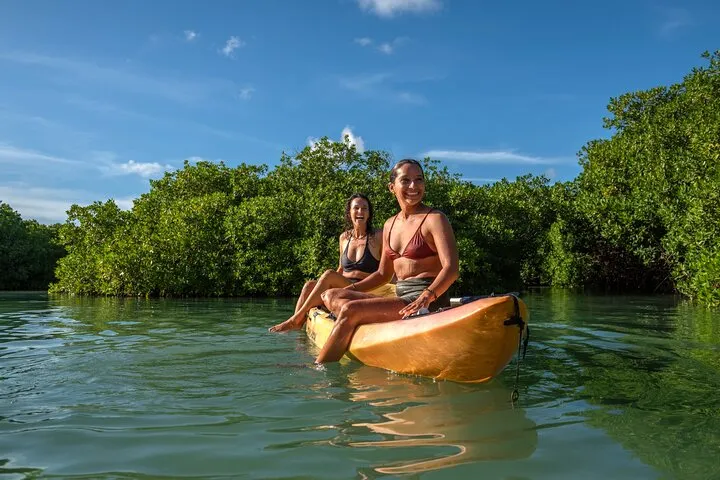
Mangrove kayak $60 Short guided snorkel Details 14 Not included 5.0 (112)
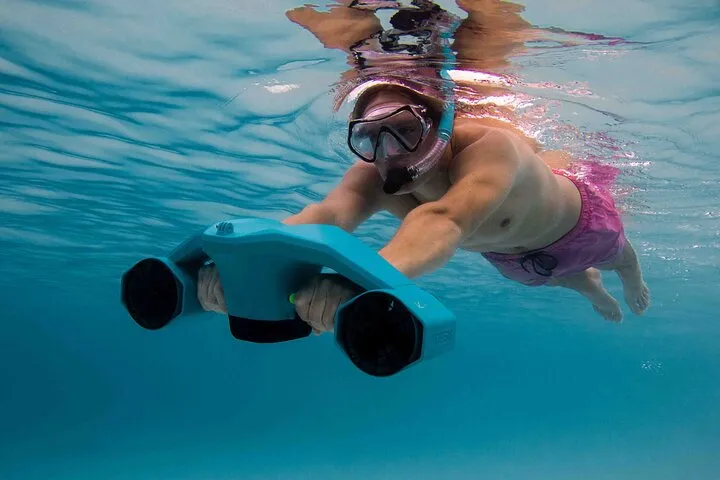
Sea scooters $125 About 1 hour Details 4 Not stated 5.0 (98)
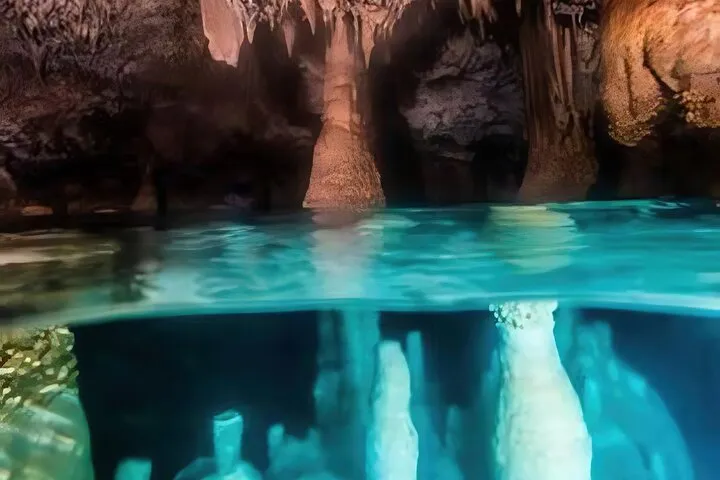
Cave climb and swim $73 Chamber swims Details 8 Fees included 4.5 (91)
Sunset sail with dinner $130 One stop Details 16 Not included 5.0 (70)

Ratings come from the platform each tour is booked through. The catamaran trip carries 1,421 reviews on Viator and 12 on GetYourGuide for what the operator sells as the same product, which is why the higher count is quoted here.

Live Dates and Prices

Live availability for the two-stop drift snorkel, straight from the booking platform. Prices on this page were last read from the listings in August 2026.

Powered by GetYourGuide

How to Choose Your Bonaire Snorkeling Tour

The six trips split cleanly by what you want the water to be: a guided reef drift, a boat day, an access pass to somewhere you cannot go alone, or an evening out.

You want the reef, with someone pointing things out

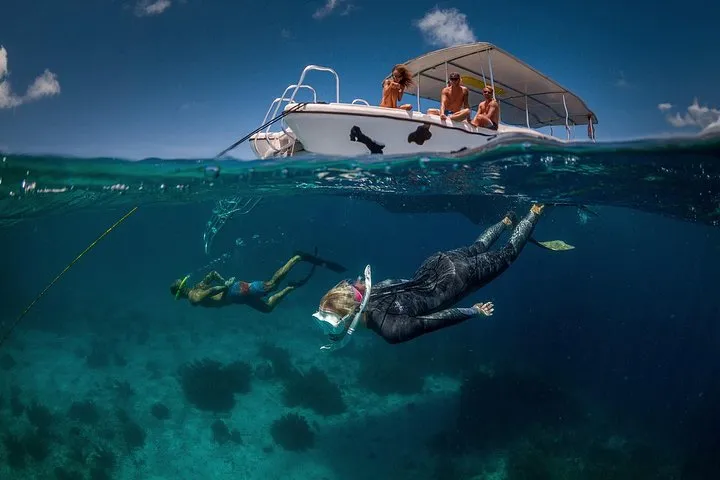
Take the two-stop drift snorkel. Aqua Fun Bonaire caps it at ten people, the guides get in the water rather than watching from the rail, and both stops run at least an hour, the longest in-water total in this catalogue. One stop is off Klein Bonaire, where the reefs are in the best condition left on the island; the second changes daily and is chosen on the morning's visibility and swell.

It is also the only listing here that puts the marine park fee inside the price, at least on GetYourGuide. The same operator sells the same trip on Viator as the Klein Bonaire Marine Park Snorkeling Excursion for $79, where the fee sits under exclusions. Six dollars apart, opposite answers on a $40 line item: worth checking on the booking screen before you pay.

Jeffrey from the United States, March 2026: "The guides were great. Friendly, very knowledgeable, and fun to hang out with." Torsten from Germany, the same month, singled out the underwater photos, which the crew takes as a matter of course.

You want the boat day, not just the swim

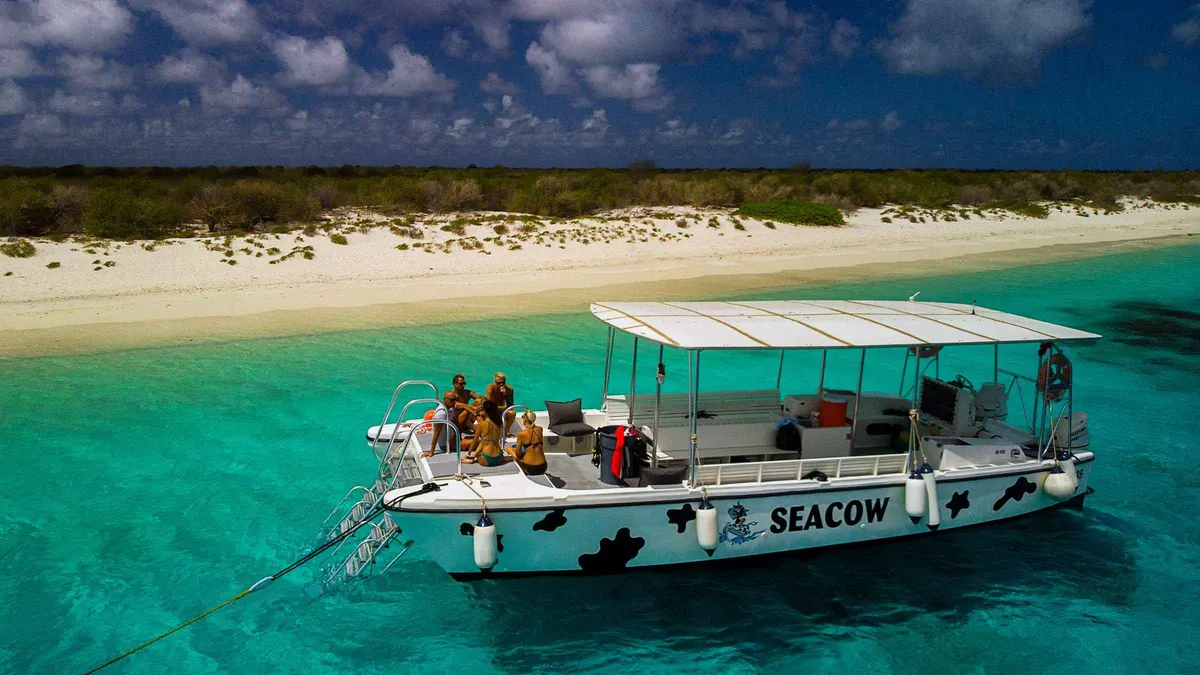
The catamaran double dip is the most reviewed snorkel trip on the island: 1,421 Viator reviews behind a straight 5.0, which no other operator here comes close to. Sea Cow runs two long drifts of 45 to 50 minutes at Klein Bonaire, splits the group in the water so nobody is trailing twenty strangers, and puts homemade snacks and rum punch on the table for the sail home.

Twenty-four people is the deck limit, so this is the busiest boat in the comparison. In exchange you get a catamaran rather than a hard-hulled runabout, shade, and a photographer whose shots you can buy afterwards. April from the United States, July 2026: "We loved both snorkels at Klein and saw so many fish…and five turtles."

The park fee is not included, and the listing says so plainly.

Someone in your group is a weak swimmer

Two answers, depending on how weak. The sea scooter tour hands you a battery-powered scooter that pulls you along, capped at four people per guide, so distance stops being a fitness question. You still have to walk into the sea carrying it, and the operator asks anyone with real mobility difficulty to book a private guide instead.

The gentler option is the mangrove kayak at Lac Bay: flat, shallow, sheltered water, and you are in a boat for most of it. Ron from the United States, who booked the catamaran trip in August 2026, wrote that he does not know how to swim and still did both drifts with the guide's encouragement, the crews on these trips are used to it, but a vest and a scooter beat willpower.

You want somewhere you cannot get to on your own

That is what the mangrove kayak and the cave tour actually sell. The mangrove channels at Lac Bay are a RAMSAR-listed wetland and closed to unguided visitors, so at $60 the cheapest trip here is the only legal way into the nursery habitat where juvenile reef fish grow up before they move out to the reef.

The cave trip is not a reef trip at all: you climb down into Bonaire's limestone systems and swim through flooded chambers. Closed shoes with grip are compulsory, flip-flops are refused at the meeting point, and it is the only tour here with a hard age window of 10 to 70. It also carries the only rating under 5.0 in this catalogue, a 4.5 across 91 reviews.

Both run on days when wind shuts the west-coast boats down.

You want the evening version

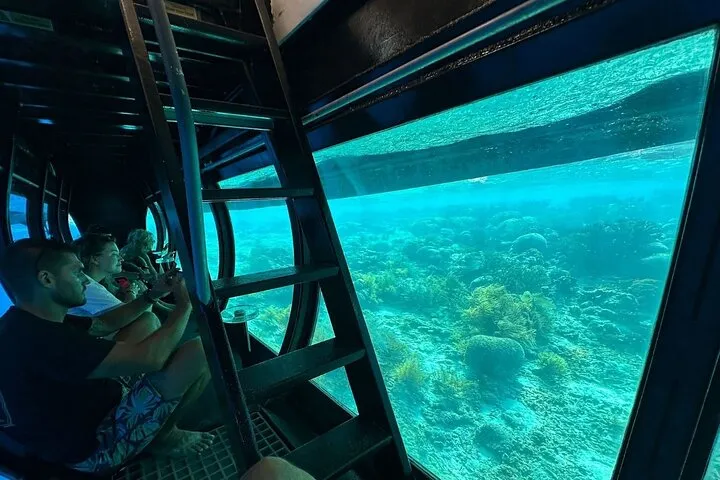
The sunset sail is the most expensive trip here at $130 and the only one that ends with dinner. The boat is the reason people book it: the Aquaspace was once part of Jacques Cousteau's fleet and still carries an air-conditioned observation deck below the waterline, so anyone in your group who does not want to get wet still sees the reef through glass.

One snorkel stop, four hours, drinks and dinner included, sixteen people maximum. Cruise passengers should read the small print twice, the operator states that late ship arrivals are non-refundable, and sunset does not move for anyone.

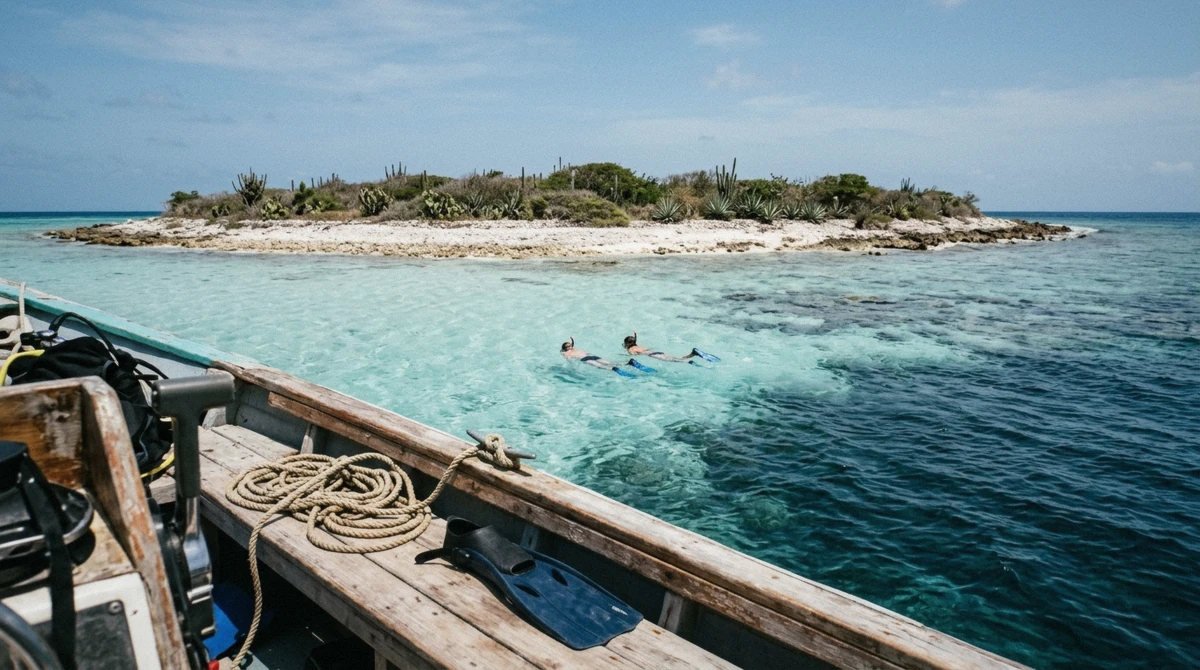
Uninhabited Klein Bonaire seen from a snorkel boat, the main destination of most Bonaire snorkeling tours
Klein Bonaire has no roads, no buildings and no shade, which is why the reefs off it are the healthiest left on the island.

Why Almost Every Boat Goes to Klein Bonaire

The small island 800 metres off the leeward coast is the reason a boat beats a rental car here.

No roads, no buildings, no run-off

Klein Bonaire is uninhabited, about six square kilometres of dry scrub and coral rubble with no pier, no shade and no facilities. Nothing is built on it, nothing drains off it, and no shore divers churn its shallows on the way in. That is the whole explanation for why its reefs still look the way Bonaire's reefs are supposed to look while the town-side shallows have thinned out.

Its beaches are protected sea-turtle nesting ground, with nesting running roughly May to December. Rangers check nature-fee QR codes on the beach, so "nobody will ask" is not a plan.

The only ways across

There are two: a snorkel boat, or the water taxi. The crossing is 30 minutes from Bonaire Nautico Marina in Kralendijk and 15 minutes from the pier at Buddy Dive Resort. Four of the six trips compared here go to Klein Bonaire, the $85 two-stop drift and the $105 catamaran work its reefs directly, and the sunset sail passes it on the evening leg.

What the boats buy that the taxi does not is the drift itself. The crew reads the current, drops you upstream of a reef section and collects you downstream. From No Name Beach you swim out and you swim back, which on a windy afternoon is a different sport entirely.

The $40 Nature Fee, and Which Tours Include It

Bonaire charges for the water itself. It is the single most misreported number about snorkeling here.

What it costs and who has to pay

The STINAPA Nature Fee is $40 per person and covers a full calendar year, January 1 to December 31, whenever you buy it. It is mandatory from the moment you enter the sea, swimming, snorkeling, kayaking, standing knee-deep off a beach: anywhere in the Bonaire National Marine Park, which is all the water around Bonaire and Klein Bonaire from the high-water line down to 60 metres.

Children under 13 are free. Residents of Aruba, Bonaire and Curaçao are exempt with a valid sédula. Everyone else pays, and the same $40 also covers Washington Slagbaai National Park on land.

Until 2023 there were two rates, $45 for divers and $25 for other water activities. That split was scrapped, so snorkelers now pay exactly what divers pay. Guides and blog posts still quoting $25 for snorkeling are running on the old system.

Buying it, and what rangers actually check

Payment is online at stinapa.bonairenaturefee.org, which emails you a QR code, or in person at the STINAPA office at Barcadera 10 in Kralendijk and at many dive shops. Rangers check the QR code together with photo ID at Klein Bonaire, Lac Bay and the west-coast entry points; a photo of your passport on your phone is accepted, so the original can stay in the safe.

Save the code somewhere that survives a wet bag. Screenshots and printouts both work.

Tour by tour

Only the $85 two-stop drift snorkel lists the marine park fee as included, and only on its GetYourGuide listing, the same operator's Viator version excludes it. The cave tour says all fees and taxes are included, but it runs underground, outside the marine park, so there is nothing to include. The catamaran, the mangrove kayak and the sunset sail all state clearly that the tag is on you. The sea scooter tour says nothing either way, which in practice means assume you are paying.

Budget it once, not per trip. If you snorkel twice in a week, the $40 is already spent.

The cruise-ship exception

Since 2024, cruise passengers can use the marine park for a $10 day rate instead of the $40 annual fee, arranged through the operator or dive shop rather than bought online. Several listings shorthand this as "not needed for cruise guests", which is not quite the same thing, the fee still exists, it is just smaller and handled for you. Anyone staying on the island for more than a day is better off with the $40.

Boat Tour or Do It Yourself?

Bonaire is the rare place where the DIY option is genuinely competitive, so here is the arithmetic rather than a recommendation.

The water-taxi maths

The Klein Bonaire water taxi is $25 per person round trip from Bonaire Nautico Marina in Kralendijk or the Buddy Dive pier, with up to four departures a day. Snorkel gear rents for $5, a beach chair another $5, and a lunch package adds $17.50. Add the $40 nature fee and a first-timer's day comes to roughly $70, or about $110 with lunch and a chair.

The $85 guided drift sits between those two numbers with the fee already inside it. The $60 mangrove kayak is cheaper than the DIY day outright, because it goes somewhere the taxi cannot.

What the extra money buys

Three things, none of them obvious from a price comparison. A drift route, so the current works for you instead of against you. A guide in the water who finds the octopus, the seahorse and the turtle you would swim straight past. And a second site chosen that morning for conditions: when the trade winds are up, the difference between a good stop and a washing machine is local knowledge nobody sells by the hour.

What the boat does not buy is more time. A water-taxi day on No Name Beach can run six hours. A boat trip runs three and a half.

And the car option

You can also skip the water entirely and drive. Most Bonaire snorkeling is shore-entry off the west coast, which is why the island rents so many pickup trucks. The catch is the entries themselves: sharp fossil ironshore with urchins and fire coral, holes underfoot and almost no sand.

Reef boots are not optional, and in any swell the exits are the dangerous half. That is the trade, a rental car buys you every site on the island and hands you the hardest part of the day.

Where the Snorkeling Actually Is

Nearly every site sits on the leeward west coast, because the trade winds make the east coast unswimmable. Lac Bay is the exception, and it is guided-only.

Karpata Best northern reef, calm days only 1000 Steps Turtles, long stair descent Bari Reef In town, most fish species Klein Bonaire Boat or water taxi only Salt Pier Only when no ship is alongside Lac Bay Mangroves, guided kayak only

Schematic, not to scale. Site notes reflect published snorkeling guides and STINAPA park information, checked August 2026.

When to Book, Month by Month

Bonaire is a desert island outside the main hurricane belt, so the question is not heat but rain and wind. Bars show average monthly rainfall; the figure below each is the average daytime high.

  • Drier months, steadier trade winds
  • Wetter months (about 65% of the year's rain falls October to January)

Roughly 500 mm of rain falls in an average year, most of it in short bursts. October and November are historically the calmest months for wind and the wettest for rain, the one period when the wind can also reverse and cut visibility. Peak visitor season runs December to April. Water stays at 26–28 °C all year.

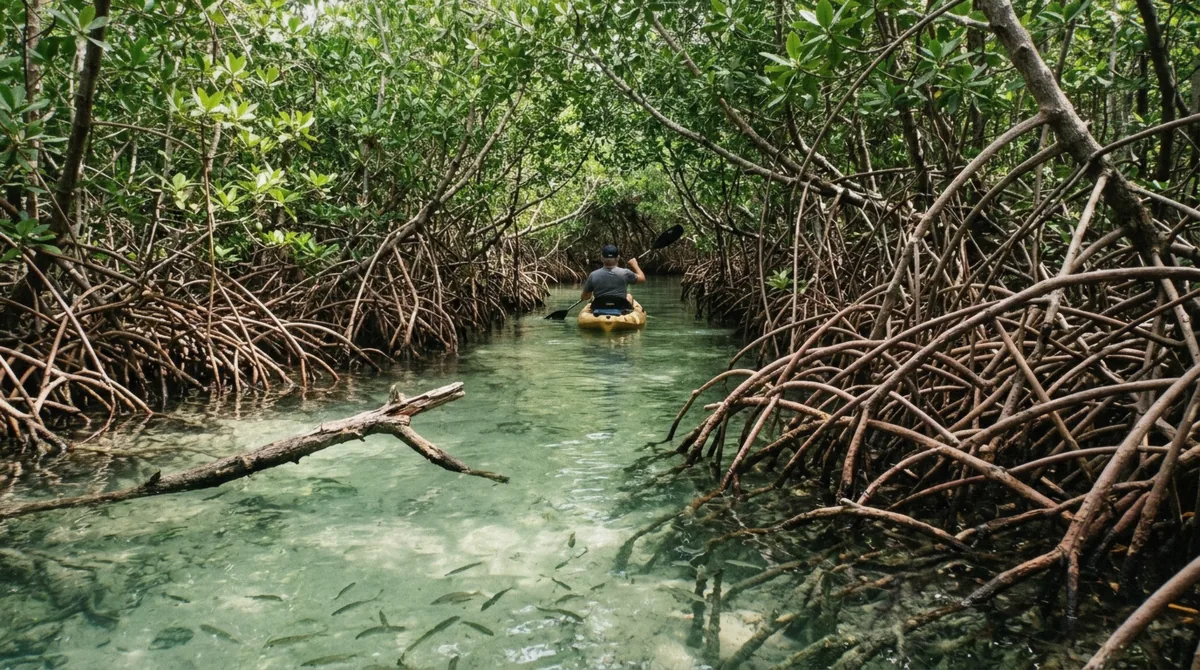
Kayaker in a mangrove channel at Lac Bay on a guided Bonaire snorkeling tour of the mangroves
Lac Bay's mangrove channels are RAMSAR-protected and closed to unguided visitors, the kayak tour is the access, not just the transport.

Snorkeling on a Cruise Ship Day

Bonaire's cruise pier sits in the middle of Kralendijk, a few minutes from where the snorkel boats leave, which makes an independent booking realistic in a way it is not at most ports.

Which trips fit the window

The two-stop drift snorkel is the one built for ship days: 3.5 hours door to door, cruise passengers collected at the exit of the cruise pier, and the operator states it can adjust to ship schedules. At the time of booking it asks for the ship name, docking time, disembarkation time and re-boarding time: provide them accurately, because that is what the timing is planned around.

The catamaran also runs 3.5 hours from the marina and works if your ship is in early. The sunset sail rarely does, and its listing warns that missed departures caused by cruise timing are non-refundable.

Two clocks and one fee

Departure times are quoted in Bonaire local time, not ship time, and the two are not always the same. Getting that wrong is the most common way passengers miss a tour here.

On the fee: cruise passengers pay the $10 marine park day rate through the operator rather than the $40 annual tag. Several listings compress this into "not needed for cruise guests". Ask when you book, and do not assume the $10 is bundled into the ticket price unless the listing says so.

What You Actually See Down There

Bonaire's reputation was built underwater, and it is worth separating what is still true from what is repeated out of habit.

The numbers, and the routine sightings

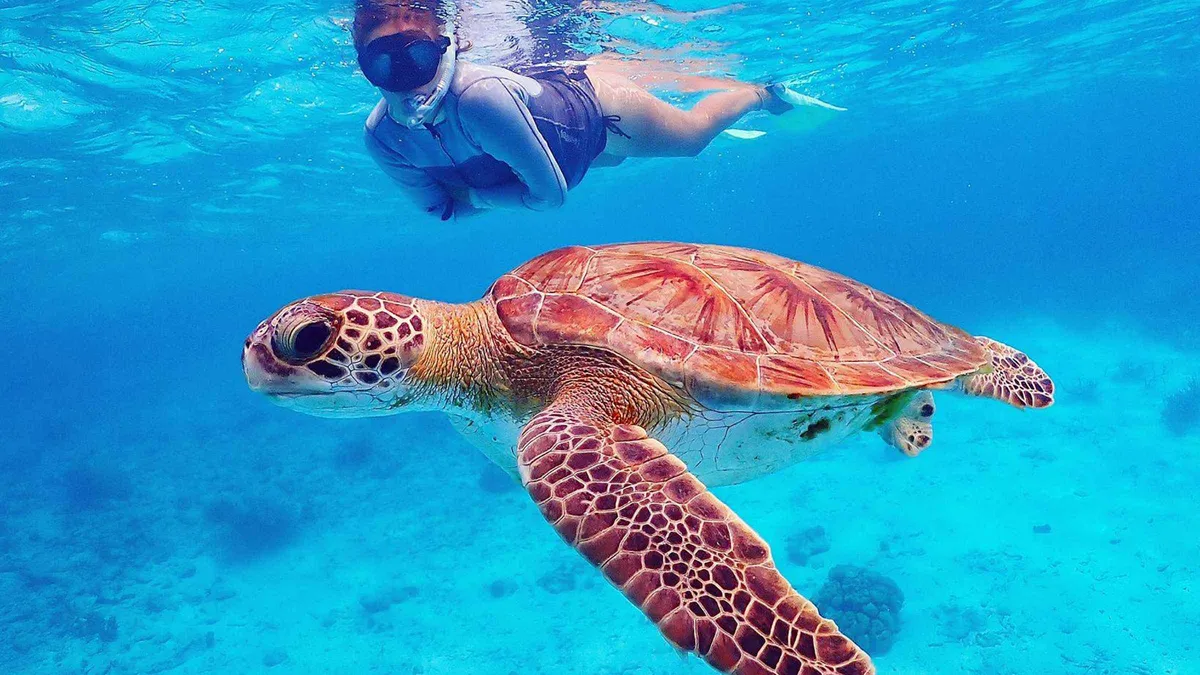
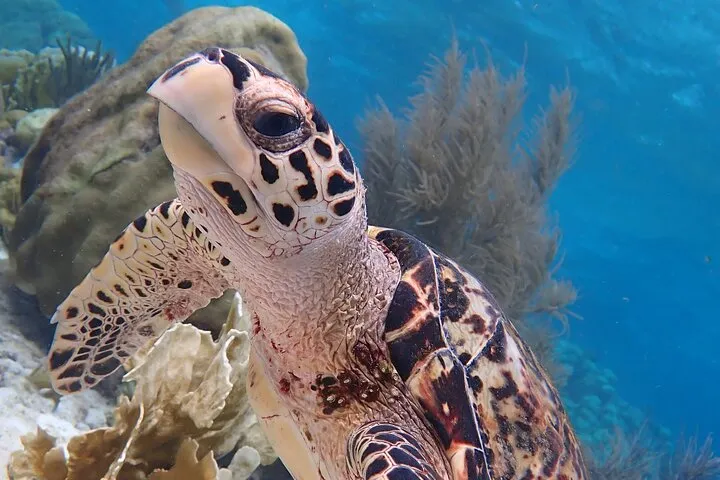
The reefs hold more than 350 fish species and around 57 species of coral. Parrotfish, angelfish, surgeonfish and schooling blue tangs are constant; green and hawksbill turtles are common enough that most half-day trips see at least one, and reviewers on the catamaran trip have counted five in a session. Tarpon hang under the boats at dusk, and squid and octopus turn up for anyone with a guide pointing.

Reef Renewal Bonaire's nursery plots of staghorn and elkhorn coral sit shallow enough to see from the surface: young, deliberately planted colonies rather than old reef, and one of the few things here that has visibly improved over a decade.

The honest part

Bonaire's shallow reef is not what it was ten years ago. Long-running snorkeling guides who returned in 2022 documented significant decline in shallow-reef health, fish size and diversity after bleaching events, coral disease, storm damage and a steep rise in cruise traffic, and some now rate Curaçao the easier snorkeling destination. That report sits in the top five results for this search, and pretending otherwise would be a strange way to run a comparison site.

What has held up best is exactly what the boats visit: the reefs off Klein Bonaire, where nothing is built and nothing drains. If your reference point is Caribbean snorkeling in 2010, temper it. If it is a crowded resort beach, Bonaire will still surprise you, and the visibility, routinely 20 to 30 metres and up to 40 on calm days, is not something most destinations can offer at all.

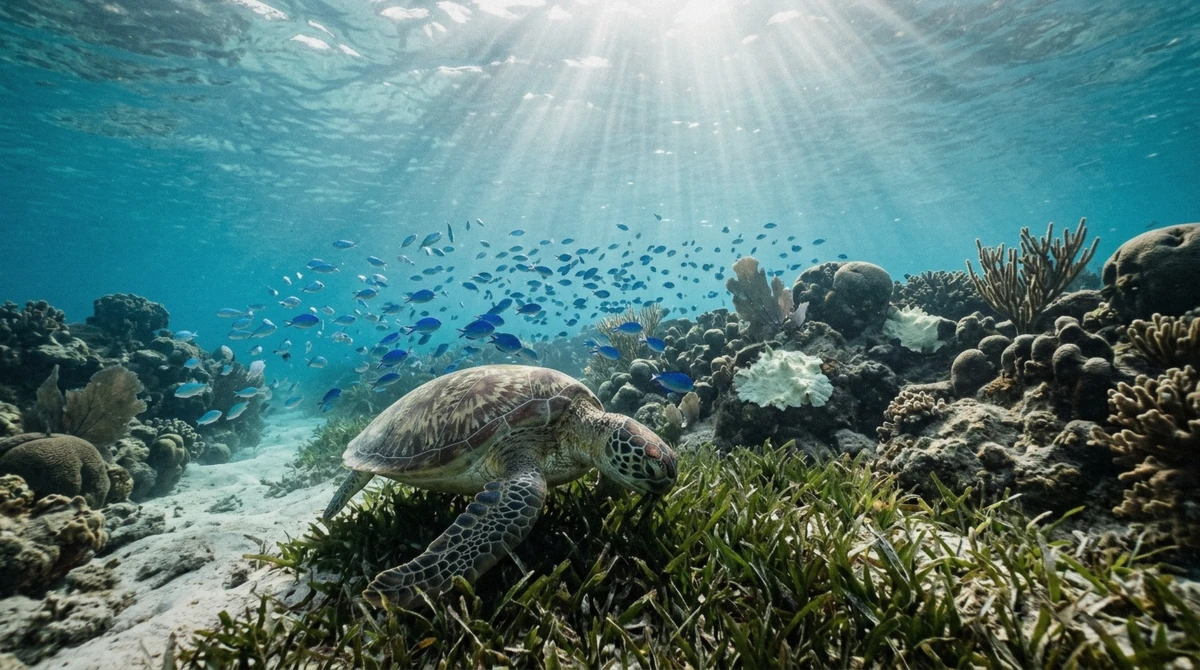
Green sea turtle grazing over seagrass with reef fish behind on a Bonaire snorkeling tour in the marine park
Green and hawksbill turtles are routine sightings on the Klein Bonaire stops; the pale patches on the hard coral are not.

How a Half-Day Drift Snorkel Runs

The shape of the standard 3.5-hour boat trip, taken from the two Klein Bonaire listings.

  1. Check-in

    Marina or cruise pier

    Meet at Harbour Village Marina, or at the cruise pier exit on ship days. Crews carry a name sign. Bring your nature-fee QR code and ID.

  2. +15 min

    Briefing and gear

    Masks, snorkels and fins fitted on board, plus flotation belts or noodles for anyone who wants them. Prescription masks are stocked by both operators.

  3. +30 min

    First drift at Klein Bonaire

    The boat drops the group upcurrent of a reef section and follows. An hour on the two-stop trip, 45 to 50 minutes on the catamaran.

  4. +1 h 45

    Snacks between stops

    Cold drinks and snacks on deck while the crew moves to the second site. Rum punch comes out on the catamaran once the swimming is finished.

  5. +2 h 15

    Second site, chosen that morning

    Picked on the day for visibility and swell: often along the main Bonaire coast rather than Klein Bonaire when the wind is up.

  6. +3 h 30

    Back at the dock

    Photos taken by the crew are offered for purchase afterwards. Cruise passengers are back with time against the re-boarding deadline.

What to Bring, and What Not to Wear

Short list. Two items on it are rules, not suggestions.

Sunscreen is regulated here

Bonaire banned sunscreen containing oxybenzone in 2021 to protect the reef, and operators ask for mineral or biodegradable sunscreen: or, better, a rash guard and nothing else. The sunset sail lists reef-safe sunscreen as something you bring rather than something they supply. A long-sleeved swim shirt solves the problem outright and also handles the jellyfish that occasionally drift through.

No touching marine life, no standing on coral, no collecting anything. STINAPA rangers enforce this.

The rest of the bag

No wetsuit: water at 26–28 °C does not need one for a three-hour trip, though anyone who chills fast can rent a shorty. Bring a towel, swimwear you can wear under clothes, and reef boots if you plan any shore snorkeling at all, the ironshore entries are sharp enough to end a holiday.

The cave tour is the exception to all of this: closed shoes with real grip are compulsory and flip-flops are turned away at the meeting point. And bring the nature-fee QR code with photo ID on every trip; rangers check.

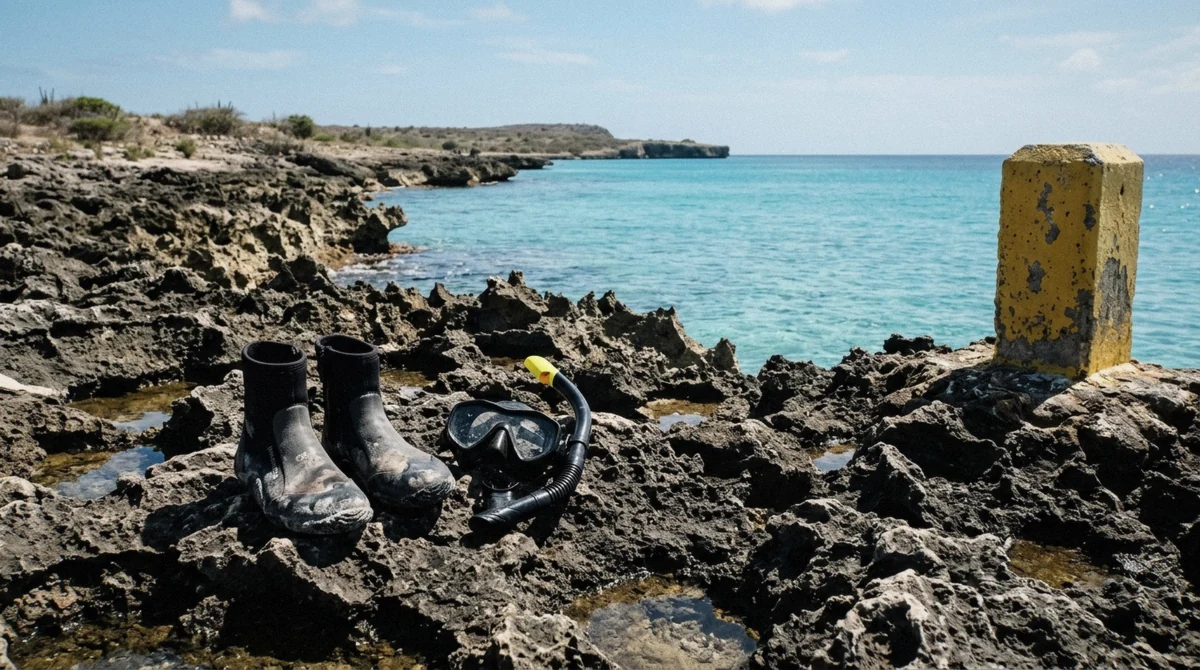
Sharp ironshore rock at a shore snorkeling entry on Bonaire with reef boots and mask on the rock
The reason boat trips sell on an island famous for shore snorkeling: most entries look like this.

What Travellers Said

The guides were great. Friendly, very knowledgeable, and fun to hang out with. We were very pleased with this activity and would recommend it.
Jeffrey · United States · March 2026 · GetYourGuide
The crew was kind and attentive. The boat felt clean and safe. We loved both snorkels at Klein and saw so many fish…and five turtles. The snacks and drinks were fabulous, and being able to purchase our photos was super fun.
April · United States · July 2026 · GetYourGuide
There were jelly fish out the day we were snorkeling, so I definitely recommend a swim shirt with long sleeves. But I know the crew can't control that and we would absolutely go with them again.
Verified traveller · United States · November 2025 · Viator
My 12 year old son and I absolutely loved the sea scooter experience. Our instructor took the most amazing pictures under water and ensured we were safe. We snorkeled with turtles and a huge bait ball of hundreds of fish.
Verified traveller · Viator · sea scooter tour

Reviews as published on GetYourGuide and Viator, quoted with the reviewer's first name, country and month. Nothing here is solicited or edited beyond length.

Bonaire Snorkeling Questions

Where is the best snorkeling on Bonaire?

The reefs off uninhabited Klein Bonaire, reached only by boat or water taxi: nothing is built on the island, so nothing runs off it. On the main island, Bari Reef in town holds the highest fish-species count, Salt Pier in the south is excellent when no ship is alongside, and Karpata and 1000 Steps in the north are worth the drive on calm days only. Four of the tours compared here work Klein Bonaire, including the two-stop drift snorkel. Full site-by-site rundown, with a map: where the shore entries are and whether they are worth it.

How much does it cost to snorkel in Bonaire?

The $40 STINAPA nature fee is unavoidable for anyone 13 or over, and covers the whole calendar year. On top of that, guided trips in this catalogue run $60 to $130 per adult, and the do-it-yourself route is about $30: water taxi $25 plus $5 gear hire. So the cheapest legal day in the water is roughly $70 for a first-time visitor. Fee details Full breakdown, including the $75 visitor entry tax most guides skip: what snorkeling on Bonaire costs.

Do I need a wetsuit to snorkel in Bonaire?

No. The water sits at 26–28 °C year-round and touches 29 °C in late summer. A rash guard or long-sleeved swim shirt is the more useful item, it handles sun, occasional jellyfish and the reef-safe sunscreen rule at once. Operators stock shorty wetsuits for anyone who chills quickly. Packing list

Which is better for snorkeling, Aruba or Bonaire?

Bonaire, for the reef itself: the entire coastline is a protected marine park, visibility routinely runs 20 to 30 metres, and the reef starts metres from shore. Aruba has easier beaches, calmer entries and better-known wrecks, which suits families who want sand more than coral. Bonaire's honest weakness is access: sharp ironshore entries and wind-exposed sites, which is exactly what a boat trip solves. The long answer, island by island: Bonaire vs Aruba vs Curaçao for snorkeling.

Is the nature fee included in a snorkeling tour?

Usually not. Of the trips compared here, only the $85 two-stop drift snorkel lists it as included, and only on its GetYourGuide listing, the same operator's Viator version excludes it. Assume you are paying the $40 separately and treat inclusion as a bonus. What each tour includes

Can I snorkel Klein Bonaire without a tour?

Yes. The water taxi runs from Bonaire Nautico Marina in Kralendijk (30 minutes) and Buddy Dive Resort (15 minutes) for $25 round trip, with gear at $5. You will be swimming out and back from No Name Beach rather than drifting with a guide, and there is no shade or facilities on the island. The full comparison

Can I do a snorkeling tour on a cruise ship day?

Yes, the cruise pier is in central Kralendijk, minutes from the boats. The two-stop drift snorkel collects passengers at the pier exit and adjusts to ship schedules; provide your ship name and re-boarding time when booking, and note that departure times are quoted in local time, not ship time. Cruise passengers pay a $10 park day rate rather than $40. Ship-day detail

When is the best time of year to snorkel Bonaire?

March to June is the driest stretch with steady trade winds. October and November bring the lightest winds but the heaviest rain and the risk of a wind reversal that cuts visibility. December to April is peak season for visitors. The island sits outside the main hurricane belt, and water temperature barely moves all year. Month by month Month by month, with rainfall and wind: when to snorkel Bonaire.

Ready to get in the water off Klein Bonaire?

Free cancellation up to 24 hours before departure on every tour compared here.

Check Availability
Tours from $60 Check Availability